Condensation that occurs on windows is not just a problem in older homes. We can also observe this problem in new constructions. Something that occurs due to the conjugation of two or one of these factors, the enclosure and/or the windows. The thermally weakest point of a home are the windows. Well, even though there are high quality windows on the market, they will never be able to solve a poorly executed enclosure. Something that with our prefabricated concrete homes you're not going to have We have the best thermal enclosure solution, something guaranteed by our excellent energy rating.
Condensation on windows
The truth is that sometimes it seems that the windows are crying. Many people wake up and realize that their windows are soaked. What makes windows wake up wet? The most curious thing is that some are wet on the glass and others on the frames. Well, it's about condensation. Today we will try to explain the reason for that humidity on the windows at night and what we see when we wake up.
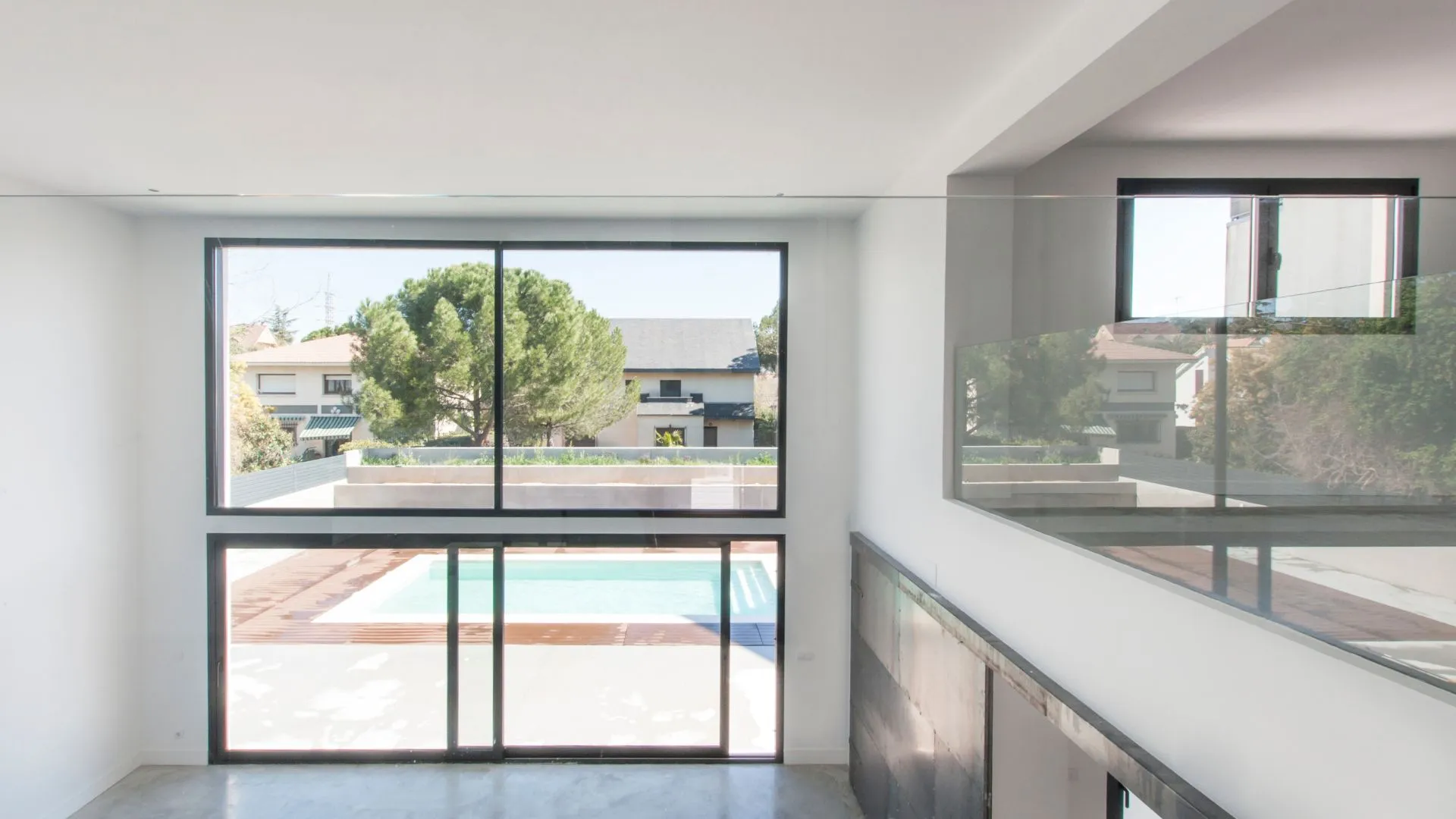
condensation
We are facing a simple change of state. The water vapor found inside the home turns into a liquid state. It becomes those little drops of water that soak the windows. Air has a certain moisture content. The degree of humidity depends on many factors. Humidity is ultimately water vapor. When the air is loaded with so much moisture that it cannot absorb it, it expels it, and it does so by changing its state from a gas to a liquid.
In short, air can contain water and the amount it can contain is related to the temperature of the air. Thus, with twenty degrees Celsius the amount of water stored in the air is fifteen grams for every kilogram of dry air. The lower the temperature, the less water can be stored. For example, if we go down to fifteen degrees, we can only contain eleven grams per kilogram of dry air.
When the air becomes saturated with humidity is the moment in which its state changes. Moisture saturation is measured with the relative humidity of the air. This term relates the water vapor contained in the air and the level of saturation water vapor. Thus, with a relative humidity of the air of fifty percent, we are saying that the air at that moment has half the humidity that it can absorb. The one that can absorb before reaching saturation, that is, condensation. The higher the relative humidity of the air, the more possibilities of condensation.
Sources of humidity inside a home
Obviously we are already clear that for condensation to occur on our windows, water vapor must be created inside. The more humidity we create indoors, the higher the percentage of relative humidity of the indoor air. What can cause this greater humidity? The inhabitants of the home for example. By breathing and sweating, it is estimated that a human being can produce up to a liter of water a day. If we close the rooms with people inside during the night we encourage condensation. The steam we give off when we breathe while asleep and reducing the volume of air when closing the door helps.
Other sources of added moisture are cooking or daily showers. These other sources can triple our own moisture creation. All these data lead us to understand that controlling the humidity in homes is essential. Currently one of the "qualities" of most buildings is watertightness. A watertight building is better thermally speaking. This quality forces us to use the ventilation of homes more effectively. An aid to this ventilation would be the installation of mechanical ventilation systems.
Condensation on windows, the reasons
Windows suffer from condensation because they are cold. The choice of the orientation of the openings in the façade is vital to anticipate these drawbacks. Open gaps in the most efficient orientation. It is not in vain that windows must fulfill two functions as a priority. That of capturing heat during daylight hours. And in the same way those of introducing light into the home.
This phenomenon occurs mostly at night and why? Because night is the coldest time. At the same time, the rooms with the highest occupancy are the ones that suffer the most from condensation. Why sometimes it is the frame and other times the glass that appears wet has a reason, it condenses the colder surface. In terms of thermal transmittance, both materials are quite bad and at the same time they are often widely used in traditional construction. We talk about metal and glass.
The aluminum frames widely used in traditional construction in the beginning without thermal break would be the worst material for a window. But not far behind would be the broken aluminum ones. To ensure that the aluminum breaks the thermal bridge, an insulator is attached between the two faces of the frame, exterior and interior. The more insulating, the better thermally speaking, but at the same time, the thicker the window will be. Without a doubt, PVC carpentry works much better than aluminum ones. If we use double glass in the window we must choose with a noble gas chamber.