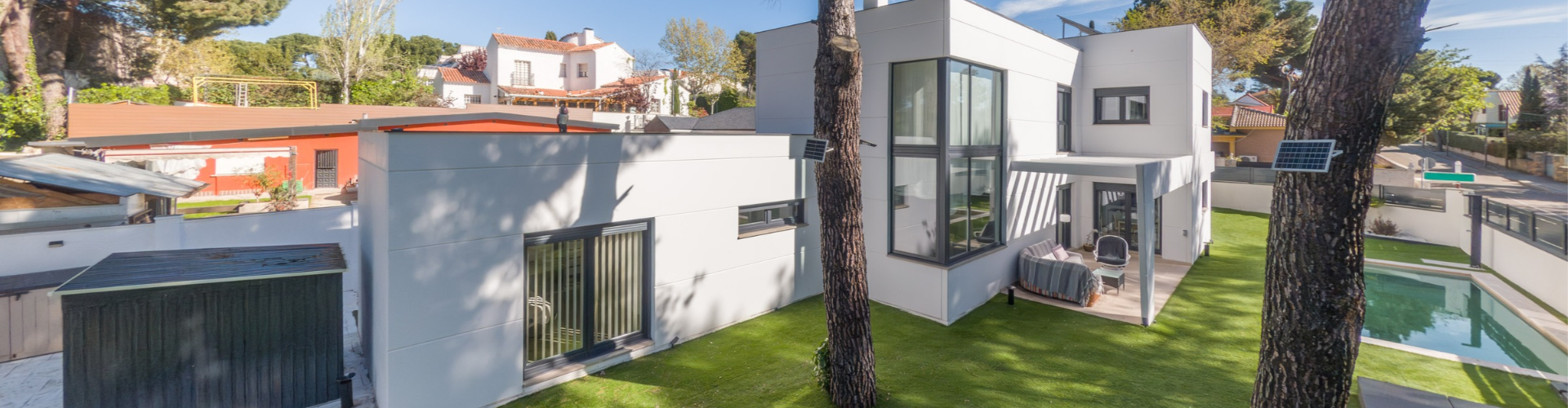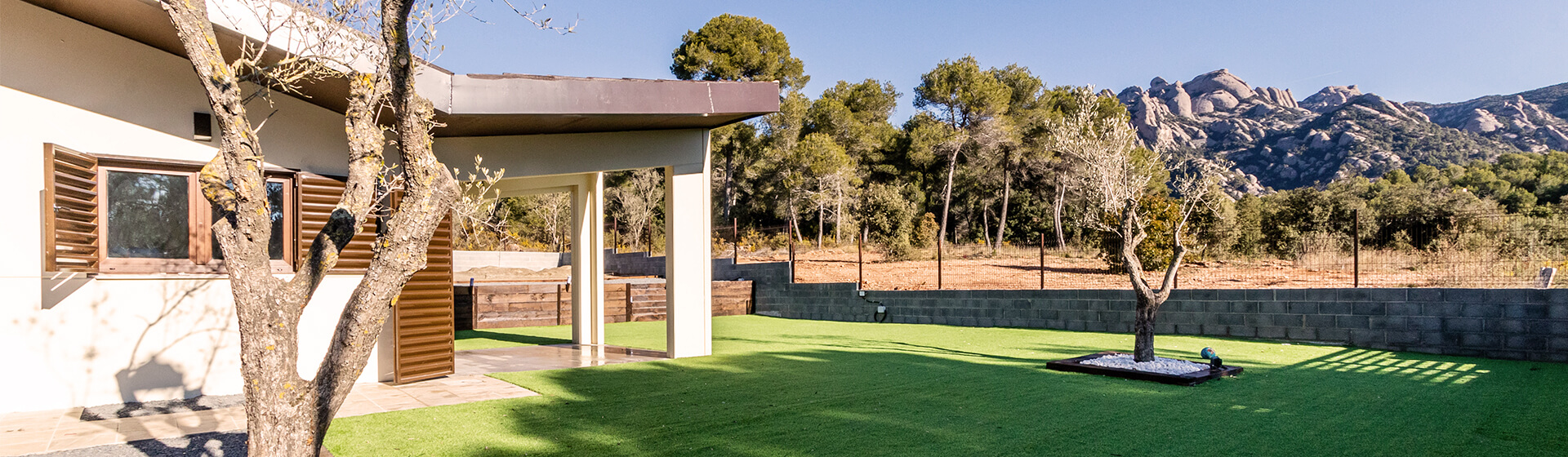
Building a modular house is an interesting option for anyone who wants to escape the hustle and noise of the big city. This type of housing They are very popular in residential areas far from the urban center, since they provide great independence and unique customization options.
Because of this, more and more families are choosing to install a modular house in rural or suburban areas. This type of land They usually have a lower cost, due to their separation from metropolitan centers, and they are an option that provides tranquility as well as a different pace of life.
The question is, Can a modular house be built on rustic land? These lands, depending on the autonomous community in which you are located, may have greater limitations and special regulations that you must respect. Next, we analyze in depth the options available to you to build your modular home.

What is rustic land and what are its characteristics?
A rural land is a type of real estate property that It is characterized by being located outside urbanized areas, in rural or suburban areas. Some of the characteristics of a rustic land are:
- Agricultural or livestock use: Rustic land is commonly used for agriculture or animal husbandry.
- Location: These are usually located in rural or suburban areas, far from cities and urbanized areas.
- Lower value: Due to their location and use, they may have a lower value than urban land.
- Terrain characteristics: Rustic lots are usually large and flat, with little or no existing construction.
- Restrictions: In some cases, they may be subject to legal and regulatory restrictions regarding their use and development.
- Limited connections: Rural land may have limited access to public services such as water, electricity and public transportation.
Differences between urban, developable and rustic land
The urban land is located within already consolidated urban or developable areas and has basic services such as water, electricity, sewage, among others. In addition, it is intended for the construction of buildings and is regulated by an urban plan.
For its part, The developable land still does not have basic services, but it is expected to be urbanized in the near future. Regarding regulations, it is subject to an urban plan that establishes the conditions for its development.
Finally, rustic land is located in rural or suburban areas and It does not have basic services or an urban plan that regulates its use.. It is mainly used for agriculture, livestock and other similar uses, and its value is generally lower than that of urban and developable land.
Advantages of building on rustic land
Build on rustic land may have some advantages compared to building on urban or developable land.
- Greater privacy and tranquility: Being located in a rural or suburban area, a rustic lot can offer greater privacy and tranquility than an urban lot.
- Lower cost of land: The value of rural land is usually lower than that of urban and developable land, which can result in significant savings at the time of purchase.
- Greater flexibility in design: By not being subject to the restrictions of urban plans, a rustic plot of land can allow greater flexibility in the design and construction of the home.
- Possibility of building a sustainable home: Being located in a rural area, it can be used to build a sustainable home that uses renewable energy and local materials.
- Greater contact with nature: Being located in a rural or suburban area, a rustic lot can offer greater contact with nature and the possibility of enjoying panoramic views.
The legality of building prefabricated houses on rustic land
In most municipalities, rural land does not have basic services nor is it regulated for its construction, so the installation of a fixed house is usually not allowed. One option is to request an urban qualification, but this process requires time and resources that may not make the operation viable.
The ideal is to opt for a removable and mobile solution, which allows removing and placing the different concrete modules. Additionally, the prefabricated house must be self-sufficient, that is, not connected to water or electricity supplies.
General regulations and necessary permits
The regulations and permits necessary to build a prefabricated house on rustic land vary according to the municipality and the autonomous community where the land is located. However, in general, some permits and compliance with certain regulations are required. The most common are the building permit, energy certification, environmental authorizations and compliance with urban regulations.
Technical considerations for the construction of prefabricated houses on rustic land
If you decide to build your prefabricated house on rustic land you must take into account the following:
Land evaluation and construction planning
You must evaluate the soil, accessibility and leveling of the land and comply with all regulations before planning construction.
Choosing the Right Prefabricated House Design
For the process to be successful, you will need to choose a size and shape of the house that adapts to the terrain. Besides, Your house must have good thermal and acoustic insulation and be made with the best possible materials.
Conclusion: Is it viable to build a prefabricated house on rustic land?
Building a permanent house in these conditions is usually a laborious and difficult process to carry out, since it requires a large number of permits and legal processes. Thus, The best solution is to opt for a mobile home that can be installed anywhere without so many restrictions. At Modular Home we offer solutions to build your modular home with the best quality.